Wooden Console Table Wholesale refers to purchasing console tables in larger quantities directly from manufacturers, distributors, or specialized furniture suppliers. It serves retailers, interior designers, hospitality businesses, and online sellers seeking consistent products at competitive prices. These tables may feature solid wood, engineered wood, reclaimed timber, or mixed materials. Their finishes can include natural oak, walnut stain, matte paint, or hand-brushed texture.
Furniture sourcing consultant James Carter explains, “Wholesale value is not only a lower price; it is dependable quality repeated across every shipment.” That perspective matters. A beautiful sample means little if later batches show uneven legs, cracked edges, or inconsistent coloring. Professional buyers should review wood species, dimensions, load capacity, moisture control, finish safety, packaging strength, and minimum order quantities. A factory inspection can reveal details photographs often hide.
The Wooden Console Table Wholesale process also involves lead times, private labeling, carton design, and freight planning. A narrow hallway table may look simple, yet its packaging needs corner protection and internal cushioning. Small errors become expensive at scale. This is where supplier experience becomes practical, not decorative.
The market is not perfectly predictable. Timber costs change, shipping schedules move, and customer preferences shift. Some buyers focus too heavily on unit price. That can be a mistake. Reliable sourcing balances cost, durability, design consistency, and after-sales support. Buyers should request current specifications and physical samples before confirming a larger order. Careful comparison is slower, but usually safer.
Definition and Scope of Wooden Console Table Wholesale
Wooden console table wholesale refers to the commercial purchase of console tables in larger quantities. Instead of buying one table, a retailer or project buyer orders several units from a manufacturer or distributor. The buyer usually receives a lower price per table. The definition is not perfectly fixed. Some suppliers set a minimum order quantity, while others accept mixed designs or finishes.
Its scope reaches beyond price and quantity. It includes wood selection, table dimensions, construction methods, surface treatment, packaging, and delivery terms. For example, a buyer may specify solid wood, engineered wood, or a combination of both. Practical details matter. A 120-centimeter table needs stable legs and protective corner packaging. Wholesale agreements may also cover samples, inspection standards, replacement policies, and production schedules.
In real sourcing, a sample may look excellent under showroom lighting. Bulk production can still show slight color or grain differences. Moisture changes may also affect wood joints during shipping. A lower quote can hide weaker packaging or longer lead times. Buyers should compare material thickness, finish quality, carton strength, and actual usable margins. Clear records help. They should include dimensions, tolerances, surface colors, and approved sample details. The scope may also include light customization, such as drawer layouts or cable openings, although every extra feature can increase production risk.
Key Features of Wholesale Wooden Console Tables
Wholesale wooden console tables are narrow storage pieces designed for volume purchasing, retail display, hospitality projects, and interior contracts. Their most useful feature is space efficiency. A typical table fits behind a sofa, along an entry wall, or beneath a mirror. Buyers should check the exact depth, not rely on photographs. A difference of five centimeters can affect installation.
Material choice strongly influences performance and price. Solid wood offers visible grain, repairability, and a warmer tactile quality. Engineered wood can provide better dimensional stability in changing humidity. Both options can work when the construction is honest. Look for reinforced joints, level legs, smooth drawer movement, and a finish that resists ordinary spills. Details matter. A small knot is not always a defect, but loose joints are.
Wholesale buyers also need consistent specifications across each shipment. Confirm dimensions, wood moisture control, color tolerance, carton protection, and replacement procedures before ordering. Practical inspection should include corner strength, surface scratches, wobble, and hardware alignment. Packaging matters more than many buyers expect; thin corner protection can turn a good table into costly damage. Minimum order quantities and lead times deserve equal attention. In real purchasing work, samples often look better than mass production. That gap needs reflection. A reliable supplier should explain it clearly and provide measurable quality standards.
Types of Wood and Console Table Designs
Wooden console table wholesale focuses on buying coordinated furniture in larger quantities for homes, hotels, and retail projects. The wood choice strongly affects price, durability, and appearance. Solid oak offers visible grain and dependable strength, while walnut creates a deeper, more refined tone. Rubberwood can provide a practical, stable option when properly kiln-dried. Reclaimed wood adds character, but its knots and color changes make exact matching difficult.
Design should follow the room’s function. A narrow console table suits hallways and small apartments, especially with a lower shelf for baskets or shoes. A drawer design keeps keys and documents hidden, while an open-frame style feels lighter beside a sofa. Some wholesale buyers prefer clean rectangular tops. Others choose curved edges, fluted fronts, or mixed wood-and-metal structures. These details influence packaging, assembly time, and customer expectations.
From my sourcing experience, moisture content and joinery deserve close inspection. A beautiful table can still warp after shipment if the wood was not dried correctly. Check leg connections, drawer movement, surface finishing, and load testing before approving a bulk order. Samples can mislead. Lighting changes the wood’s color. I once underestimated how different two batches looked under warm indoor lights. That mistake made color tolerances and inspection photos essential. Clear measurements also matter, because a table that looks elegant online may block a narrow passageway.
What Is a Wooden Console Table Wholesale?
Wooden console tables are narrow furniture pieces commonly used in entryways, living rooms, hallways, and behind sofas. Wholesale selections often include minimalist, farmhouse, mid-century modern, industrial, and contemporary designs made from different wood species.
How to read the chart: The values show approximate Janka hardness ratings in pounds-force (lbf), a commonly used measure of wood resistance to denting. Harder woods, such as hard maple and red oak, are generally suitable for high-use console tables, while softer woods, such as eastern white pine, are easier to work with and often used for casual or rustic designs.
How the Wholesale Purchasing Process Works
What Is Wooden Console Table Wholesale? How the Wholesale Purchasing Process Works
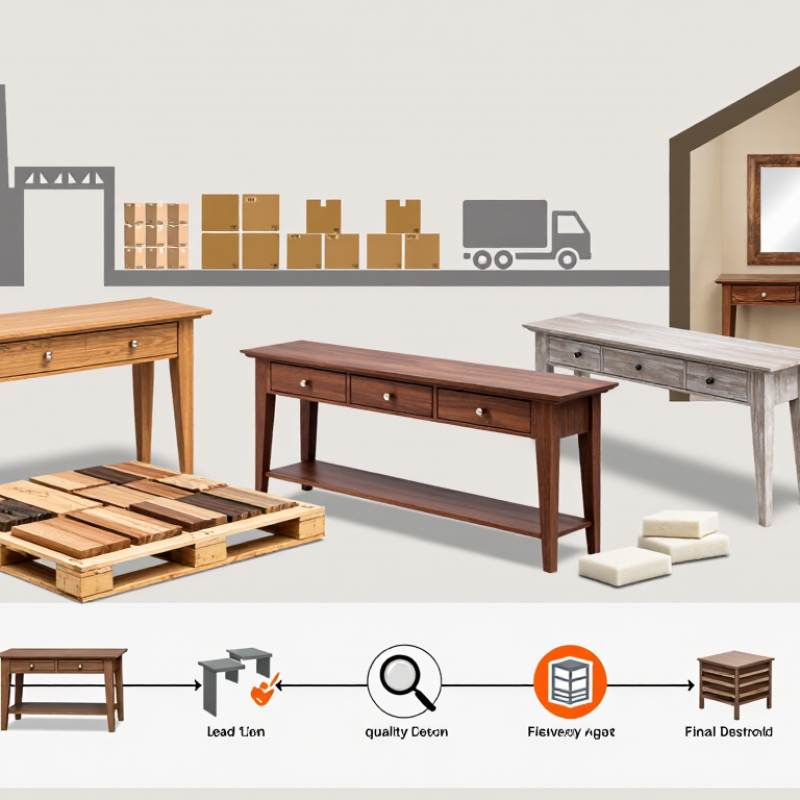
Wooden console table wholesale means buying multiple units from a manufacturer, exporter, or trade distributor at volume pricing. The process usually starts with a product brief: wood species, dimensions, finish, packaging, target quantity, and delivery location. A buyer then requests quotations from several suppliers, rather than accepting the first attractive price. Details matter. A low unit price may hide expensive packaging, inland freight, or inspection charges.
Supplier evaluation should include factory experience, material certificates, sample approval, production capacity, and payment terms. Buyers often order one sample first, checking wobbling, drawer alignment, surface scratches, and moisture damage. After approval, the supplier confirms the minimum order quantity and provides a production schedule. Independent inspection before shipment can verify dimensions, finish consistency, carton strength, and order quantities. This step feels slow, but replacing damaged furniture costs more.
The landed cost combines the product price, freight, duties, insurance, handling, and possible storage fees. The U.S. Census Bureau reported that e-commerce represented 16.1% of total U.S. retail sales in 2024, showing why reliable packaging and fulfillment matter. A 2024 global furniture market assessment by IMARC Group valued the sector at over 1 trillion U.S. dollars, reflecting substantial demand across residential and commercial channels. Still, published forecasts differ. Buyers should test assumptions against actual sales, lead times, and return rates. Wholesale purchasing is not simply buying cheaper tables; it is managing specifications, cash flow, quality risk, and delivery evidence.
Factors Affecting Wholesale Pricing and Selection
What Is Wooden Console Table Wholesale?
Wooden console table wholesale means purchasing multiple tables directly from a manufacturer or commercial supplier. Buyers usually serve furniture stores, hospitality projects, or online retailers. Wholesale pricing depends on wood species, dimensions, finish, order quantity, and production complexity. Solid hardwood usually costs more than engineered wood. Hand-finished edges also require additional labor.
Shipping can change the final price significantly. A narrow table may fit more efficiently into a container, while oversized packaging increases freight costs. Moisture content matters too. Poorly dried wood can warp after delivery. Ask for material specifications, assembly drawings, sample photos, and a physical sample before placing a large order. Confirm the minimum order quantity and replacement policy in writing. I have found that attractive quotations sometimes exclude packaging or inland transport. That detail can damage an otherwise careful budget.
Tips:
Compare landed cost, not only the unit price. Check table stability, drawer alignment, surface consistency, and corner protection. Request a small trial order when possible. Also, leave room for mistakes. A sample may look perfect, but repeated production can reveal color differences. Select designs that match your customers’ rooms and daily habits. Tables with thin legs may look elegant, yet they can be unsuitable for busy entrances. Review the finish under warm and cool lighting. A reliable supplier should answer technical questions clearly and provide consistent production records. Personally, I would value transparent communication over a slightly lower quotation. It usually prevents expensive surprises later.
FAQS
It means buying multiple tables at volume pricing. Buyers usually specify wood, dimensions, finish, packaging, quantity, and delivery location.
Solid oak offers visible grain and dependable strength. Walnut gives a darker, refined appearance. Properly dried rubberwood provides a stable option. Reclaimed wood adds character, but matching can be difficult.
Match the design to the room’s function. Narrow tables suit hallways and small apartments. Lower shelves can hold baskets or shoes. Drawers hide keys and documents.
Check moisture content, leg connections, drawer movement, surface finishing, and load performance. Look for wobbling and scratches. Do not judge appearance alone.
Poorly dried wood may warp after shipment. Ask for moisture information and inspect the sample carefully. A beautiful table can still fail later.
A sample reveals alignment, stability, finish quality, and packaging risks. It also exposes design problems before production begins. Samples can mislead.
Consider the table price, freight, duties, insurance, handling, storage, and inspection fees. A low unit price may hide costly delivery details.
Review carton strength, protective materials, table measurements, and assembly instructions. Confirm the package fits narrow delivery routes. Replacing damaged furniture costs more.
Review production experience, material documentation, capacity, payment terms, and sample results. Request quotations from several suppliers. The cheapest offer may not be the safest.
Warm indoor lighting can change how wood appears. Different batches may show noticeable tone differences. I once underestimated this issue. Set color tolerances and keep inspection photos.
Conclusion
Wooden Console Table Wholesale refers to the bulk purchasing and distribution of console tables made primarily from wood. It serves retailers, interior designers, hospitality businesses, and other commercial buyers seeking coordinated furniture in larger quantities. Wholesale console tables are commonly valued for their practical size, durable construction, adaptable style, and ability to support entryways, living rooms, hallways, and commercial interiors.
Available options may include solid wood, engineered wood, reclaimed wood, or combinations of different materials, with designs ranging from minimalist and contemporary to traditional and rustic. The wholesale purchasing process usually involves selecting products, reviewing specifications and quantities, confirming customization needs, requesting quotations, and arranging payment and delivery. Pricing and product selection can be influenced by wood type, craftsmanship, dimensions, finish, order volume, packaging, shipping distance, and customization. Buyers should compare quality, consistency, lead times, and after-sales terms to choose products that balance appearance, performance, and overall value.