
0%

Choosing the Best Wooden Coffee Table Manufacturer in China requires more than comparing factory prices. Buyers must examine timber sourcing, moisture control, joinery, finishing, packaging, and long-term quality. Grand View Research valued the global furniture market at approximately USD 766.2 billion in 2023, with continued growth projected through 2030. This figure reflects strong demand, but it does not guarantee dependable manufacturing.

A qualified Wooden Coffee Table Manufacturer should provide clear material specifications, production photographs, sample approvals, and independent quality inspections. Look closely at kiln-dried wood, stable panel construction, smooth edges, and low-VOC coatings. A table may appear beautiful under showroom lighting, yet reveal warping after one humid season. That detail matters.

The Forest Stewardship Council’s chain-of-custody framework also helps buyers verify responsibly sourced timber. Meanwhile, ISO 9001-based quality systems can support consistent production, although certification alone cannot replace factory audits. As designer William Morris advised, “Have nothing in your house that you do not know to be useful, or believe to be beautiful.” His principle remains practical for modern furniture sourcing.

Experience still exposes the gaps. A factory may promise precision, but its carton testing, hardware labeling, and replacement policy show real capability. Some manufacturers communicate well but document poorly. That is a warning, not a final judgment. The strongest Chinese suppliers combine skilled woodworking with measurable controls, flexible customization, and honest reporting. This guide evaluates those qualities carefully, while recognizing one uncomfortable truth: no manufacturer is perfect, and every specification deserves verification.
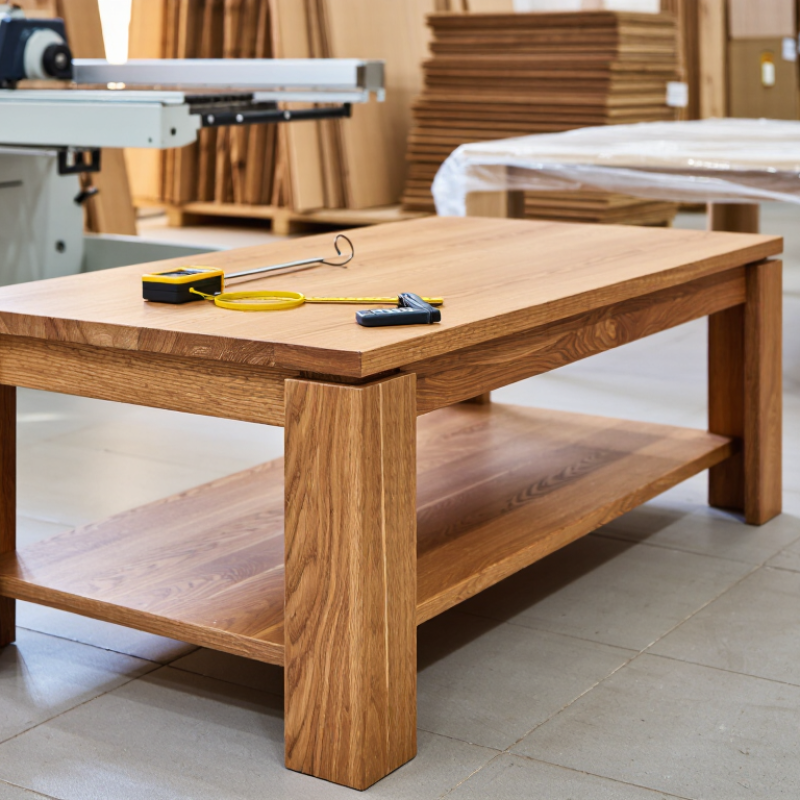
Best Wooden Coffee Table Manufacturer in China

What Defines a Leading Wooden Coffee Table Manufacturer in China

A leading wooden coffee table manufacturer in China is defined by more than attractive product photos. It combines practical experience, stable craftsmanship, and clear production records.

Skilled teams understand how wood behaves after cutting, drying, and assembly. Kiln-dried timber with controlled moisture, often around 8–12%, helps reduce warping in ordinary indoor conditions. However, no workshop can eliminate every natural change. Wood remains a living-looking material.

Professional manufacturers inspect boards for cracks, uneven grain, and hidden defects before production. They use accurate cutting equipment, reinforced joints, and careful sanding around edges.

A reliable factory should explain its wood sources, finishing process, packaging method, and inspection standards. It should also provide samples that show the real surface, color, weight, and assembly quality. Factory visits or documented quality checks add credibility. Photos alone are not enough.

Tips:

Ask for a moisture report and a pre-production sample. Check whether the table stays stable on a flat floor. Rub the finish lightly with a clean cloth and look for rough fibers or color transfer. Discuss tolerance levels for dimensions and natural grain differences. A strong manufacturer welcomes these questions. Still, buyers should review their own requirements carefully; a beautiful sample may not match every production batch perfectly. Clear communication prevents small misunderstandings from becoming costly furniture problems.

Wood Types, Materials, and Construction Methods

Best Wooden Coffee Table Manufacturer in China

Wood choice shapes a coffee table’s strength, appearance, and service life. Oak offers firm grain and good impact resistance, while walnut provides darker color and softer visual contrast. Rubberwood is cost-effective, but it needs careful kiln-drying and joint sealing. Bamboo is not timber, yet laminated bamboo can create stable panels when adhesive quality is controlled.

The USDA Forest Products Laboratory’s Wood Handbook states that wood changes dimension as moisture content changes. A reliable manufacturer should measure moisture before machining, not only after assembly. Mortise-and-tenon joints suit solid wood frames, while dowels and reinforced screws work well for engineered panels. Edge-glued boards need balanced grain direction. Small details matter. The FAO Global Forest Resources Assessment 2020 reports that forests cover about 31% of global land area, making responsible sourcing and efficient cutting increasingly important. UNEP’s Global Resources Outlook 2024 also warns that material extraction may rise sharply by 2060. Better yield is not just an environmental choice; it reduces waste and cost.

Tips: Ask for the wood species, moisture range, panel structure, and finish test results. Check whether the tabletop has expansion clearance. A rigid apron can restrict seasonal movement and cause cracks. I have seen beautiful tables fail because this detail was ignored. No finish fixes poor construction. Timber selection is still partly judgment, and even experienced makers sometimes revise their process after long-term testing.

Best Wooden Coffee Table Manufacturer in China - Wood Types, Materials, and Construction Methods

Wood Type or Material Typical Technical Data Appearance and Performance Recommended Coffee Table Applications Common Construction Methods Quality Control Considerations
Oak Janka hardness: approximately 1,290–1,360 lbf
Commonly available as solid wood or veneer
Pronounced grain, good wear resistance, and strong load-bearing performance. White oak generally has a lighter, more neutral appearance than red oak. Durable living-room tables, lift-top tables, nesting tables, and designs requiring visible natural grain. Edge-glued panels, mortise-and-tenon joints, dowel joints, concealed metal fasteners, and framed veneer panels. Check board moisture content, grain matching, knot treatment, joint tightness, surface sanding, and finish uniformity.
Rubberwood Janka hardness: approximately 960 lbf
Usually supplied as laminated solid-wood panels
Fine, relatively uniform grain and a light color that accepts stains and painted finishes well. It is commonly sourced from plantation-grown trees after latex production. Painted coffee tables, cost-efficient solid-wood collections, and furniture with simple modern profiles. Finger-jointed or edge-glued panels, dowel joints, corner blocks, screws, and water-based or UV-cured finishes. Verify kiln drying, preservative treatment where required, adhesive coverage, panel flatness, and resistance to cracking.
Walnut Janka hardness: approximately 1,010 lbf
Available as solid wood, veneer, or engineered walnut-faced panels
Naturally dark brown tones, attractive grain variation, and moderate hardness. It provides a premium appearance but may show color differences between boards. High-end occasional tables, minimalist designs, statement tabletops, and dark-stained interiors. Book-matched veneer, floating-panel construction, mortise-and-tenon joinery, dowels, and concealed inserts. Confirm color consistency, veneer direction, filler quality, UV-finish compatibility, and protection against dents.
Ash Janka hardness: approximately 1,320 lbf
Commonly used in solid panels, legs, and bent components
Pale color with a prominent open grain. It offers good strength and shock resistance and can resemble oak in texture. Scandinavian-style tables, tapered-leg designs, open-grain finishes, and furniture requiring strong slender components. Mortise-and-tenon joints, dowels, finger joints, edge-glued panels, and steam-bent or laminated elements. Inspect grain orientation, leg stability, moisture balance, open-pore finishing, and resistance to seasonal movement.
Pine Janka hardness: approximately 380–690 lbf, depending on species
Usually supplied as solid wood or laminated panels
Light color, visible knots, low to moderate hardness, and easy machinability. It is more susceptible to dents than oak, ash, or walnut. Rustic tables, farmhouse styles, painted furniture, lightweight designs, and price-sensitive product lines. Edge-glued panels, dowels, screws, corner blocks, frame-and-panel construction, and distressed finishing. Control knot stability, resin bleed, surface dents, panel warping, moisture content, and finish adhesion.
Birch Plywood Cross-laminated veneer layers
Typical thicknesses for tabletops and shelves: approximately 15–24 mm
High dimensional stability compared with many solid-wood panels, consistent strength, and clean exposed edges when properly finished. Modern tabletops, curved or layered designs, storage coffee tables, and furniture requiring reduced seasonal movement. Cross-laminated panels, CNC-cut components, dowels, confirmat screws, threaded inserts, and exposed-edge detailing. Check veneer quality, voids, delamination, thickness tolerance, edge sealing, formaldehyde-emission documentation, and panel flatness.
MDF with Wood Veneer Uniform engineered wood-fiber core
Often finished with natural-wood veneer, paint, or laminate
Smooth and stable surface with consistent thickness. It is heavier than many plywood panels and is less suitable for exposed edges without sealing. Flat contemporary tabletops, painted surfaces, routed profiles, and designs requiring a highly uniform finish. CNC routing, dowel joints, cam-and-dowel fittings, edge banding, veneer pressing, and sealed painted edges. Verify density, screw-holding performance, edge sealing, veneer adhesion, surface flatness, and moisture protection.
Solid Wood Top with Metal Base Mixed-material construction
Common base materials include powder-coated steel or stainless steel
Combines natural wood character with a strong, contemporary support structure. Metal bases can provide good stability when properly engineered. Industrial, modern, and transitional coffee tables; especially suitable for large tops or open-leg designs. Slotted mounting plates, threaded inserts, adjustable feet, welded frames, and movement-tolerant fasteners. Allow for solid-wood expansion and contraction, inspect welds, coating thickness, base squareness, hardware strength, and floor protection.
Solid-Wood Joinery Recommended moisture content: commonly about 8–12% for many indoor environments
Actual target depends on destination climate and wood species
Provides a traditional appearance and strong mechanical connection when properly designed. Solid wood naturally changes dimension with humidity. Premium tables, framed tops, substantial legs, extension mechanisms, and handcrafted furniture details. Mortise-and-tenon, loose tenon, dowel, finger, spline, and floating-panel construction. Confirm adequate allowance for wood movement, balanced assemblies, tight but not forced joints, and correct grain direction.
Protective Surface Finishes Common options: water-based lacquer, PU coating, oil, wax, and UV-cured finish
Sheen may range from matte to high gloss
Finishes influence stain resistance, scratch visibility, color depth, tactile feel, and long-term maintenance requirements. All indoor coffee table categories, with the finish selected according to wood type, design style, and expected use. Sanding, staining when required, sealer application, topcoat application, curing, and final inspection under controlled lighting. Test adhesion, color consistency, gloss level, odor, curing time, water resistance, scratch resistance, and compliance documentation.

Technical values are typical reference ranges. Final specifications should be confirmed according to the selected wood species, panel grade, destination climate, design load, and applicable furniture safety requirements.

Design, Customization, and Manufacturing Capabilities

Best Wooden Coffee Table Manufacturer in China

A capable wooden coffee table manufacturer begins with practical design, not decoration alone. Experienced designers study room size, walking space, tabletop thickness, and leg stability. They can develop round, oval, nesting, lift-top, and storage coffee tables. Solid oak, walnut, rubberwood, and engineered wood offer different costs and appearances. Each material needs suitable moisture control and finishing methods. Details decide quality.

Customization should cover more than color. Buyers can adjust dimensions, edge profiles, leg shapes, veneers, hardware, and surface textures. A professional team converts sketches into technical drawings and production samples. CNC cutting supports repeatable shapes, while hand sanding improves touch and visible edges. Finishing samples should be checked under natural and indoor light. Small changes matter. A warmer stain may alter the whole room.

Reliable manufacturing depends on controlled steps. Inspectors should check wood moisture, panel flatness, joint strength, coating coverage, and packaging protection. Trial assembly can reveal uneven legs or drawers that bind. Clear approval records reduce misunderstandings between design and factory teams. We have learned that a beautiful prototype can still fail during mass production. Some complex details need simplification. That is not always a weakness; it may improve consistency, cost, and delivery reliability. Manufacturers should also explain realistic tolerances instead of promising perfect uniformity. Handmade variation can remain visible, especially in natural grain.

Best Wooden Coffee Table Manufacturer in China: Design, Customization, and Manufacturing Capabilities

The chart presents common reference ranges used in wooden coffee table design. Final dimensions depend on the intended room, function, structure, materials, and customization requirements.

Quality Control, Certifications, and Production Standards

Best Wooden Coffee Table Manufacturer in China

Quality Control, Certifications, and Production Standards

Choosing the best wooden coffee table manufacturer in China requires more than inspecting polished photos. Quality begins with controlled timber selection, moisture testing, and clear grading records. At an experienced factory, incoming wood is checked for warping, cracks, knots, and insect damage. Moisture meters should show stable readings before machining, because humid wood can split after delivery. Small details matter.

Production standards should be visible on the shop floor, not hidden in a sales file. Operators use approved drawings, calibrated cutting tools, and jigs that keep leg spacing consistent. Inspectors measure tabletop thickness, corner radius, load performance, coating adhesion, and surface smoothness. Each batch needs photographs, inspection reports, and traceable codes linking materials to finished tables. This recording habit supports accountability when a problem appears months later.

Certifications add value when they match the destination market and are independently verified. FSC chain-of-custody certification can support responsible wood sourcing, where applicable. For composite panels, formaldehyde requirements such as TSCA Title VI or CARB Phase 2 may apply. ISO 9001 can indicate a structured quality system, but it does not replace product testing. A dependable manufacturer shares valid certificates, test methods, and renewal dates without hesitation. No process is flawless. Even strong factories may miss a finish mark or overlook a measurement. The real test is whether they investigate, correct, and prevent the same error from returning.

How to Choose the Right Chinese Manufacturer for Your Project

Best Wooden Coffee Table Manufacturer in China

How to Choose the Right Chinese Manufacturer for Your Project

Choosing a Chinese wooden coffee table manufacturer requires more than comparing quotations. CSIL’s World Furniture Outlook 2024 identifies China as the world’s largest furniture producer and exporter. That scale creates strong capacity, but quality still varies between factories. Request recent production photos, export references, material specifications, and a live video audit. A polished showroom proves little.

Check the wood carefully. Ask whether the supplier uses solid wood, veneer, or engineered panels. Require moisture-control records, especially for tables shipped across humid or dry climates. FSC’s 2024 facts report more than 160 million hectares of certified forest worldwide, but certification must match the actual material and supply chain. Verify the certificate holder and product scope. Do not accept a logo alone.

Sampling should test more than appearance. Measure joint strength, surface consistency, edge finishing, packaging compression, and assembly time. Intertek’s furniture testing guidance commonly addresses stability, strength, durability, and chemical safety, so these points belong in the inspection plan. An honest supplier should explain failure risks, not promise perfection. In practice, I have seen attractive samples hide uneven legs and weak carton protection. That mistake is expensive. Keep a signed specification sheet, approve a pre-production sample, and use an independent final inspection before payment. 久久精品

FAQS

Which wood types suit a wooden coffee table?

Oak offers strong grain and good impact resistance. Walnut creates a darker, softer visual effect. Rubberwood can reduce cost, but it needs careful drying and sealed joints. Laminated bamboo may work for stable panels when adhesive quality is controlled.

Why does moisture control matter?

Wood expands and contracts as moisture changes. A reliable factory measures moisture before machining. It should also check moisture after assembly. Skipping this step can cause cracks, warping, or loose joints.

Which construction methods provide reliable table strength?

Mortise-and-tenon joints suit solid wood frames. Dowels and reinforced screws support engineered panels. Edge-glued boards need balanced grain direction. Small construction details matter greatly.

What customization options should buyers request?

Buyers can adjust dimensions, edge profiles, leg shapes, veneers, hardware, and surface textures. Customization should include technical drawings and production samples. A warmer stain can look very different under indoor lighting.

How can a factory maintain consistent production quality?

Inspectors should check moisture, panel flatness, joint strength, coating coverage, and packaging protection. Trial assembly can reveal uneven legs or stuck drawers. A beautiful prototype may still fail during mass production.

What should buyers inspect in a pre-production sample?

Check joint strength, surface consistency, edge finishing, assembly time, and table stability. Test the tabletop’s expansion clearance. A rigid apron may restrict movement and cause cracks.

How should buyers evaluate a potential supplier?

Request recent production photos, export references, material details, and a live factory video audit. A polished showroom proves little. Ask for clear records, not only attractive promises.

How can responsible material use reduce project risks?

Efficient cutting reduces wood waste and production cost. Buyers should confirm the species, panel structure, and supply documents. Certification marks alone are not enough. The paperwork must match the actual material.

Why are realistic tolerances important?

Natural grain and handmade sanding can create visible variation. Perfect uniformity is rarely realistic. Some complex details may need simplification for better consistency. I once underestimated this point.

Conclusion

Choosing the best Wooden Coffee Table Manufacturer in China requires evaluating more than price and appearance. A leading supplier should offer dependable wood selection, including solid hardwoods and engineered materials, along with suitable construction methods that ensure strength, stability, and long-term performance. Their design team should be capable of developing contemporary, traditional, or fully customized tables while supporting flexible sizes, finishes, colors, packaging, and production volumes.

Quality control is equally important. Reliable manufacturers maintain clear inspection procedures from raw material sourcing to final assembly, supported by consistent production standards and relevant certifications. Buyers should also assess manufacturing capacity, communication efficiency, sample development, lead times, and after-sales support. By comparing these factors carefully, businesses can select a professional partner that delivers attractive, durable, and consistently manufactured wooden coffee tables aligned with their project requirements and target market.

Sophia

Sophia

Sophia is a dedicated marketing professional with a profound expertise in our company's product offerings. With a keen understanding of market dynamics and consumer behavior, she consistently leverages her knowledge to craft engaging and informative content for our professional blog. Her passion......